Gleanings

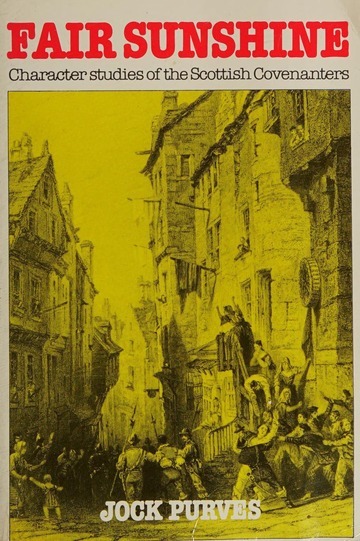

"In the ultimate issue the question at stake, in all its stark nakedness, was whether a temporal monarch or the Lord Jesus Christ was to be 'Head over all things to the Church'. To faithful Covenanters only one answer was possible, and whether their problems concerned individuals, families, conventicles, or general assemblies, they urged with fierce and unshakable tenacity that 'Jesus Christ is Lord'. No suffering could be too great to endure in such a cause. The scaffold could not daunt them; instruments of torture could not make them quail; the sufferings and discomforts of cave or moor or prison-cell could not move them to act and speak against conscience. Behind and above covenants subscribed with their hands and witnessed to by their hearts, and in an even truer sense subscribed in their blood, was 'the everlasting covenant, ordered in all things and sure', itself sealed with the blood of the Mediator, and itself the pattern of all lesser covenants. Faith gave buoyancy to the Covenanters' resolution; hope was the anchor of their souls; the love of Christ shed abroad in their hearts ever spurred them on to do and to suffer; 'outside the camp' they bore His reproach; and before them ever loomed large 'the recompense of the reward' and the gates of the city of God.
"The 'Killing Time' eventually gave place to toleration and freedom. The overthrow of King James Il and the establishment of William and Mary on the throne brought liberty and enlargement. But whether faith and hope and love shone as brightly in Scottish hearts in the velvety days ahead as in the grim days which produced the Covenanting Movement, let those judge who can."
by S. M. HOUGHTON, in the appendix to Jock Purve's Fair Sunshine, Character Studies of the Scotttish Covenanters ( Banner of Truth, 1968), page 203.
= = = = = = = = = = = = = = = = = = = = = = = = = = = = = = = =
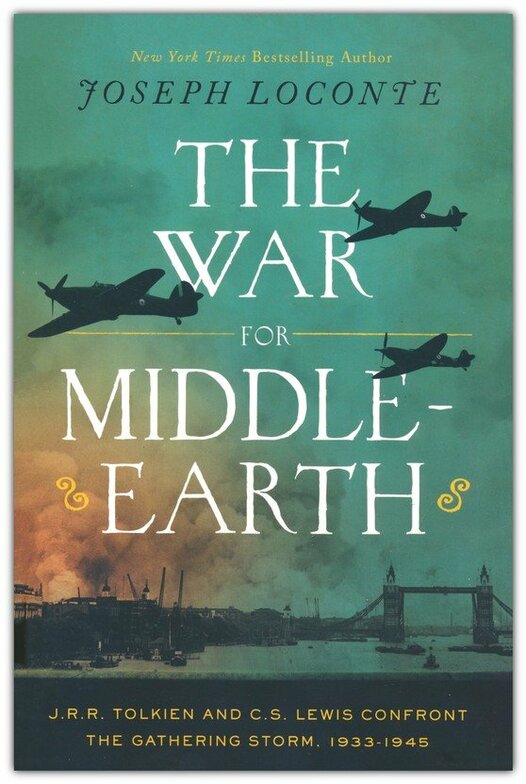
In "The Decline of Religion," a short but revealing essay written just after the war, Lewis explained his basic conceptual approach as a Christian scholar and author: "If the intellectual climate is such that when a man comes to the crisis at which he must either accept or reject Christ, his reason and imagination are not on the wrong side, then his conflict will be fought out under favorable conditions." ... Modern life was awash in competing ideologies, yet nearly all agreed on one thing: The imaginative mind had nothing to say to the "real" world, the world of "facts" and "rationality." Against this view, Lewis sought to put reason and imagination on the right side of the struggle for the human soul. In achieving this goal in both his scholarly and fictional works, he emerged as arguably the most influential defender of the faith in modern times." [emphasis added]
from Joseph Laconte's The War for Middle-Earth, J.R.R. Tolkien and C.S. Lewis Confront the Gathering Storm, 1933-1945 (Nelson Books, 2025), page 209.